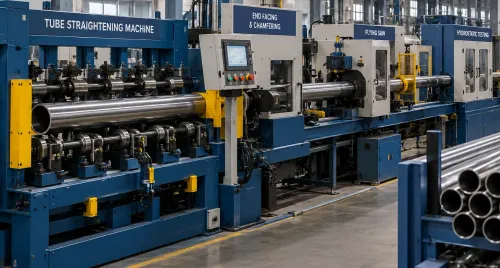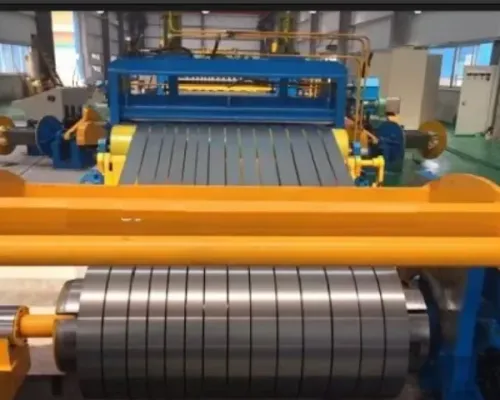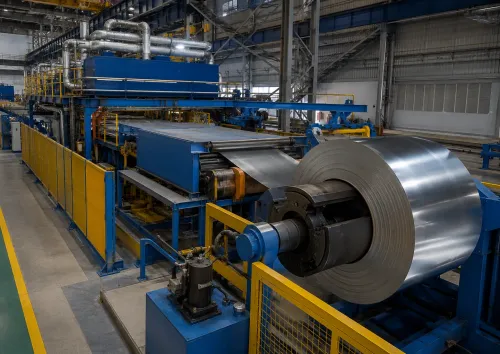
Steel processing begins long before fabrication or assembly. One of the most important stages is converting large coils into flat sheets of precise dimensions. This is the role of Cut-to-Length Lines, which are widely used in industries requiring accurate sheet sizes and high production efficiency.
Selecting the right cut-to-length line involves more than comparing machine specifications. Manufacturers must consider production capacity, material characteristics, automation requirements, and future business growth.
For companies in Faridabad and across Haryana, choosing suitable processing equipment can improve productivity while supporting consistent product quality.
What Is a Cut-to-Length Line?
A cut-to-length line is an automated system that unwinds steel coils, levels the material, measures the required length, and cuts sheets to precise dimensions.
The process generally includes:
- Coil loading
- Decoiling
- Straightening and leveling
- Measuring
- Cutting
- Stacking finished sheets
The result is accurately cut flat sheets ready for further manufacturing or distribution.
Industries That Depend on Cut-to-Length Lines
These systems support numerous industrial sectors, including:
- Construction
- Automotive manufacturing
- Electrical equipment
- Industrial fabrication
- Furniture manufacturing
- Infrastructure projects
- HVAC equipment
- Engineering products
Because sheet dimensions directly influence downstream operations, cutting accuracy is essential.
Factors to Consider Before Buying
Every production facility has different operational priorities. Before investing, manufacturers should evaluate several important factors.
Material Specifications
Consider the thickness, width, and type of steel that will be processed.
Production Capacity
The required daily output influences machine configuration and automation level.
Cutting Accuracy
Consistent sheet dimensions reduce rejection rates and improve customer satisfaction.
Leveling Performance
Proper leveling removes coil set and improves flatness before cutting.
Automation Features
Automated controls improve efficiency while reducing operator involvement.
Maintenance Requirements
Easy access for servicing helps minimize production downtime.
Benefits of Modern Cut-to-Length Lines
A well-designed system provides several operational advantages.
- Higher production efficiency
- Accurate sheet dimensions
- Better material utilization
- Reduced manual handling
- Improved workplace safety
- Consistent product quality
- Faster order fulfillment
These benefits contribute to lower operating costs over the long term.
Common Buying Mistakes
Some manufacturers focus only on initial investment rather than overall lifecycle performance.
Common mistakes include:
- Selecting insufficient production capacity
- Ignoring future expansion
- Overlooking automation compatibility
- Choosing equipment without adequate service support
- Underestimating maintenance needs
A thorough evaluation helps avoid these challenges.
Why Demand Is Growing in Faridabad
Faridabad continues to be an important centre for engineering, automotive, and industrial manufacturing. Companies serving these sectors increasingly require efficient steel processing equipment capable of delivering accurate results while supporting higher production volumes.
Modern cut-to-length lines help manufacturers improve productivity and maintain consistent quality across different product categories.
Choosing the Right Equipment Partner
Industrial machinery should be supported by strong engineering, customization capabilities, and dependable technical assistance.
Gallium Equipment Pvt. Ltd. in Faridabad manufactures equipment for tube mills, roll forming systems, and steel processing applications, including cut-to-length lines designed for demanding industrial environments. The company develops solutions that integrate with modern production facilities while supporting accuracy, efficiency, and long-term operational reliability.
For manufacturers planning future growth, selecting the right cut-to-length line can improve material utilization, streamline production, and provide the flexibility needed to meet evolving customer requirements.
Keywords