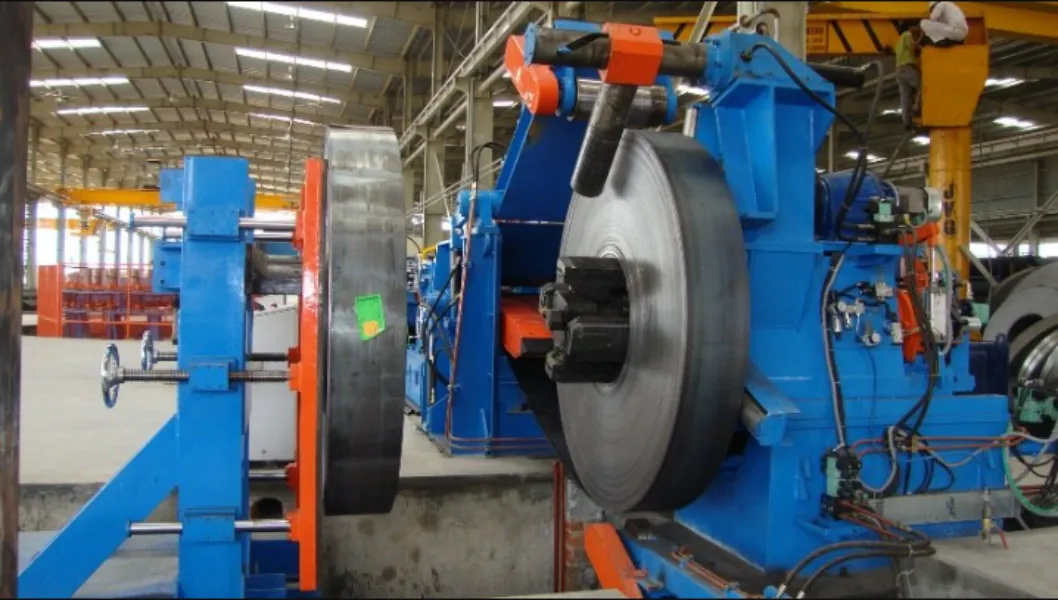
Handling heavy steel coils is one of the most demanding tasks in any metal processing facility. Whether the coils are destined for a tube mill, roll forming line, slitting line, or cut-to-length system, moving them safely and accurately is essential for maintaining production efficiency. This is where Coil Cars play a crucial role.
A coil car is designed to transport heavy coils from the storage area to the decoiler or other processing equipment with precision and minimal manual effort. By simplifying coil loading, manufacturers can reduce downtime, improve workplace safety, and maintain a smoother production workflow.
For manufacturers in Faridabad, where industries such as automotive, steel processing, and engineering continue to grow, investing in efficient coil handling equipment has become an important part of modern manufacturing.
What Is a Coil Car?
A coil car is an automated or motorized material handling system that carries steel coils to the designated loading position. Once aligned with the decoiler, the coil can be transferred accurately without excessive manual handling.
The equipment is designed to support heavy loads while ensuring stable movement and proper positioning.
Coil cars are commonly integrated with:
- Decoilers
- Roll forming mills
- Tube mills
- Pipe manufacturing lines
- Slitting lines
- Cut-to-length systems
- Coil storage systems
Their role is to make the transition from storage to production both efficient and reliable.
Challenges of Manual Coil Handling
Steel coils can weigh several tonnes, making manual handling difficult and potentially hazardous.
Without suitable handling equipment, manufacturers may face issues such as:
- Delays in production
- Risk of workplace injuries
- Damage to raw materials
- Incorrect coil positioning
- Increased dependence on overhead cranes
- Longer machine setup times
As production volumes increase, these challenges become more significant.
Benefits of Using Coil Cars
Faster Coil Loading
Coil cars reduce the time required to position coils on the decoiler, allowing production to resume more quickly.
Improved Workplace Safety
Minimizing manual handling lowers the risk of accidents associated with lifting and moving heavy coils.
Better Positioning Accuracy
Accurate alignment ensures smooth loading onto the decoiler, reducing setup errors.
Reduced Equipment Wear
Controlled movement minimizes impacts that could damage both the coil and surrounding machinery.
Higher Productivity
Efficient coil transfer shortens idle time between production batches, improving overall equipment utilization.
Features to Look For
Before selecting a coil car, manufacturers should consider:
- Maximum load capacity
- Travel speed
- Lifting mechanism
- Positioning accuracy
- Hydraulic or electric drive options
- Integration with existing equipment
- Safety interlocks
- Operator controls
- Maintenance accessibility
- Durability for continuous operation
Selecting equipment based on production requirements rather than only initial investment often delivers better long-term performance.
Applications Across Industries
Coil cars are widely used in industries including:
- Tube and pipe manufacturing
- Steel service centres
- Automotive component production
- Construction material manufacturing
- Industrial fabrication
- Cable tray manufacturing
- Heavy engineering
- Infrastructure product manufacturing
As automation becomes more common, coil handling systems are increasingly integrated into complete production lines.
Supporting Manufacturing Growth in Faridabad
Faridabad remains one of India's most important industrial regions, with businesses supplying products to domestic and international markets. Manufacturers are under constant pressure to improve efficiency while maintaining quality and worker safety.
Automated coil handling solutions help achieve these objectives by streamlining material movement and reducing production delays. Reliable coil cars also contribute to better coordination between storage, loading, and processing operations.
Choosing the Right Equipment Provider
Every manufacturing plant has unique layout constraints and production requirements. For this reason, selecting a coil car involves more than comparing specifications—it requires understanding how the equipment will integrate with the overall production process.
Gallium Equipment Pvt. Ltd., based in Faridabad, manufactures industrial equipment for tube mills, roll forming lines, and steel processing applications. The company's coil handling solutions are designed to support accurate positioning, smooth material transfer, and efficient production workflows. Choosing equipment from an experienced manufacturer can help businesses improve operational reliability while preparing for future production expansion.
Keywords