A bundling line can lose production even when its strapper has a short cycle time: tubes still need to accumulate, count, align, form, secure, weigh and transfer without creating a handling hazard. By the end, you will know how to define the bundle, specify the operating sequence, compare automation levels and check whether a proposed system can deliver stable output for your actual pipe mix.
Key takeaways
- Measure throughput through storage or loading, not only strap-head speed.
- Match bundle geometry and securing materials to tube size and surface.
- Compare automation by counting, alignment, transfer and weighing tasks.
- Validate defect detection, guarding and acceptance tests before purchase.
How tubes move from the cutoff to a finished bundle
The practical cycle ends when a stable, secured bundle reaches storage or loading—not when the strap head finishes. Accumulation capacity, tube counting, alignment, transfer and weighing can limit output before the strapper does.
1. The tube cutoff discharges finished tubes onto a runout conveyor or accumulation table. Sensors separate each tube and prevent the next piece from entering while the transfer zone is occupied.
2. The control system performs tube counting against the selected bundle quantity. It stops the feed at the target count and flags a missing, overlapping or double-detected tube before formation continues.
3. Side guides and an end stop feed the group into a tube alignment machine. The system squares the ends and builds the specified round, rectangular or layer-based pack; separators or protective sheets enter between layers when required.
4. A pusher, lifter or shuttle moves the aligned pack onto the bundle transfer table. The table supports the load while the next group accumulates, preventing tubes from rolling or striking one another.
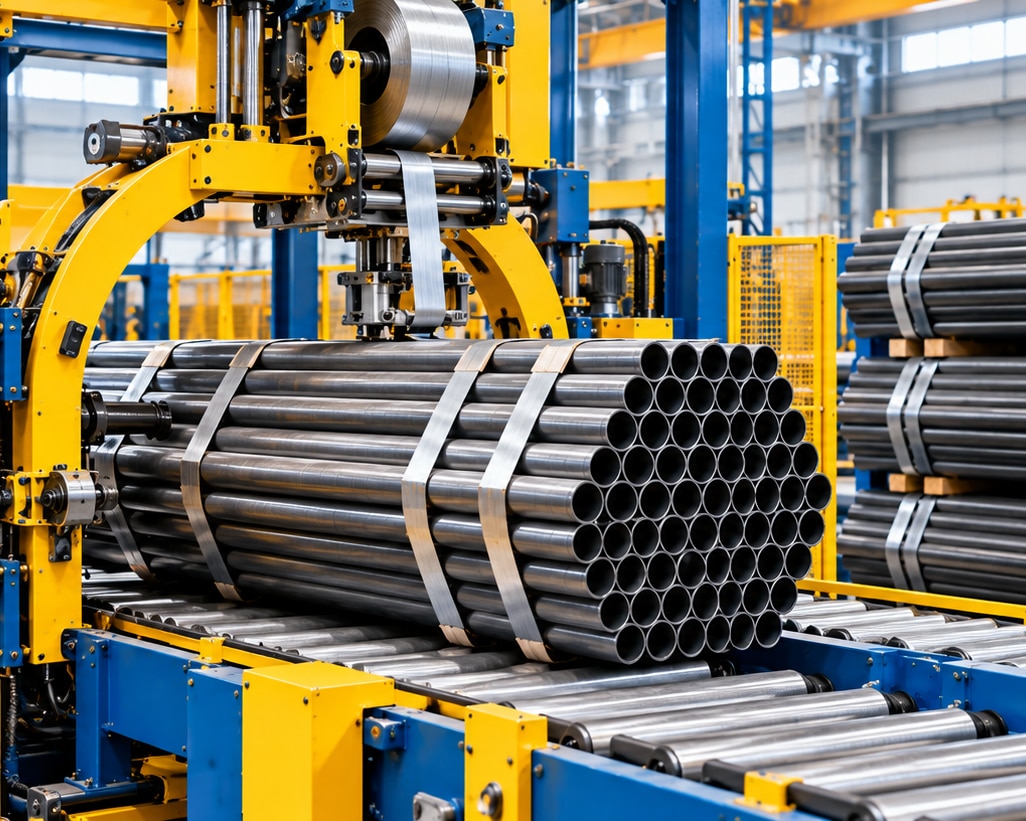
5. Strapping heads apply steel or polyester strap at programmed positions, then tension, seal and cut it. The line can add corner protectors, paper wrapping or shrink film before weighing and identification.
6. The finished bundle transfers to saddles, chocks, a rack or the loading position. Confirm the storage surface and lifting method before release; a round pack can roll when a strap is cut or when a sling lifts it unevenly.
Machine guards, interlocked access doors and controlled restart protection must cover guides, lifters, pushers and strap heads. Isolate energy before clearing a jam.
How to choose bundle geometry, tube compatibility and securing materials
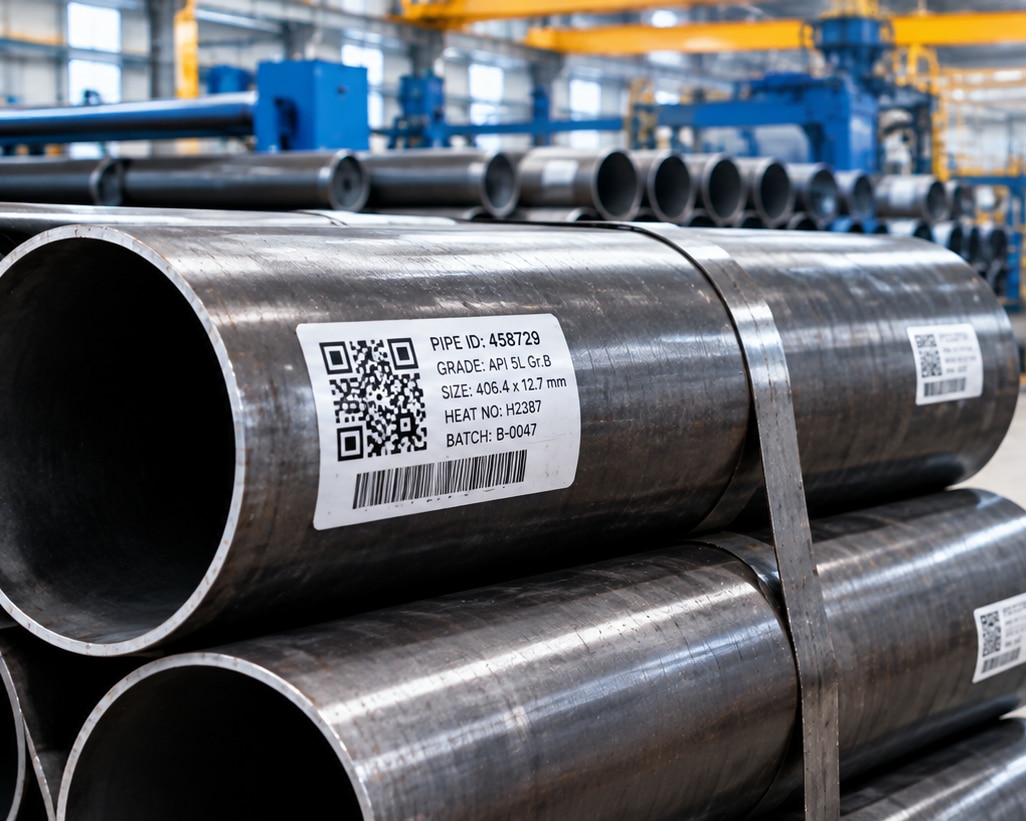
Choose geometry from the full product range, not the fastest nominal cycle. Specify outside-diameter range, tube length, wall thickness, section shape, bundle mass, surface finish and strap positions, then validate the smallest and largest bundle with trial packs. Manual guide or pocket changes can consume the time gained by automation.
| Format | What to confirm | Main risk |
|---|---|---|
| Round tube bundles | Bundle saddles, chocks or cradles; controlled lifting points | Tubes can roll when a strap is cut or the bundle is placed on an incline |
| Square pipe bundles | Four-sided forming guides and corner control | Loose outer tubes can shift if guide clearance is excessive |
| Rectangular packs | Layer count, orientation and maximum width-to-height ratio | Uneven layers can twist the pack during transfer |
| Hexagonal bundle pattern | Forming tooling, side restraint and strap sequence | Close packing reduces voids but increases rolling risk without restraint |
Use separators when layers could mark one another or when the bundle needs extra stability. Select replaceable low-friction guide surfaces for polished, coated or precision-drawn tubes; dirty steel guides and tube impacts can cause scratches. Add protective wrapping, paper, film or sleeves when surface protection matters, and fit corner protectors before tensioning.
- Steel strap delivers high restraint with low stretch but introduces sharp edges, corrosion and handling hazards.
- Polyester strap cushions surfaces better but loses effective restraint through creep or relaxation.
- Polypropylene strap suits lighter-duty packs; do not select it from breaking strength alone.
- Specify wire banding heads only when the wire diameter, twist or seal method matches the bundle force and transport route.
How settings and automation level affect real throughput
An advertised strap cycle does not equal output. Count tube gaps, miscounts, bundle re-forming, strap replenishment, jam recovery and forklift delays when calculating sustained bundles per hour; the real bottleneck is often accumulation capacity or transfer time.
Set each operating parameter against the product and handling limits:
- Set the bundle count setting below the customer’s maximum weight, crane or forklift capacity, conveyor rating and strap load. The weakest limit controls.
- Set bundle dimensions to produce a stable shape without forcing tubes against guides. Include tube length, outside diameter and bundle pattern in the recipe.
- Set strap spacing close enough to stop tube movement during lifting and transport, but keep it clear of welds, threaded ends and lifting points.
- Set strap tension high enough to prevent shifting. Validate it on thin-wall, galvanized and coated tube because excess force can dent, cut or deform the outer tubes.
- Set transfer speed to match counting, forming and strapping; acceleration that outruns alignment creates unstable bundles.
- Set discharge height as low as the receiving rack or vehicle permits. A large drop damages surfaces and jolts straps.
Automatic tube bundling outperforms alternatives when the line runs a repetitive product mix, labour is constrained and the upstream mill can feed continuously. Compare total changeover time, not just strap time.
| Mode | Best fit | Throughput consequence |
|---|---|---|
| Automatic tube bundling | Long runs and fixed recipes | Highest sustained bundles per hour |
| Semi-automatic bundling | Frequent sizes and moderate volume | Lower labour, with operator-dependent changeovers |
| Manual pipe packing | Low volume or irregular orders | Flexible, but counting and fatigue limit output |
How to control bundling hazards and catch defects before release
A release gate must combine machine safeguards with a documented bundle inspection. Apply ISO 12100 risk assessment to side guides, lifters, pushers and strap heads, then prevent access with an interlocked access door, perimeter exclusion zone and emergency stop. Jam clearing must isolate stored energy and block unexpected restart.
- Check pinch points before production, including areas where rolling tubes can trap hands. Keep people away from suspended bundles, and control strap recoil with a guarded tensioning and cutting zone.
- Confirm the tube count against the production order. Reject uneven tube ends, missing separators, telescoped layers and loose straps; realign and restrain the bundle before release.
- Verify strap position, tension and edge protection. Excess tension can dent thin-wall or coated tube, while insufficient tension lets tubes shift; record settings against diameter, wall thickness and bundle geometry.
- Place round bundles on saddles, chocks or dedicated cradles. Strapping alone cannot stop rolling tubes during storage, lifting or forklift handling.
- Inspect for dents, scratches, coating damage, protruding tubes and crushed edges under the straps. Photograph defects and quarantine the bundle rather than hiding them with wrapping.
- Match the final count, bundle weight, identification tag and shipping documents before loading.
| Check | Pass condition | Hold the bundle when |
|---|---|---|
| Count and geometry | Count, aligned ends and square footprint match the order | Ends are uneven or layers have telescoped |
| Restraint | Strap spacing and tension hold tubes without marks or movement | Straps are loose, cutting edges or missing |
| Transport readiness | Cradle support, lifting points and documents are confirmed | The bundle rolls, shifts or lacks weight information |
How to specify and validate a bundling system before purchase
A supplier’s maximum bundle weight proves little without the installation limits behind it. Make tube bundling machine selection depend on documented trials, load calculations and sustained output across your actual products, not the fastest advertised strap cycle.
1. Send the complete tube schedule: outside diameter, length, wall thickness, section shape, surface finish, tube count per bundle and target bundle dimensions. Request a compatibility matrix showing permitted ranges, guide changes, forming-tool changes and strap positions.
2. Request a load calculation naming the lowest limit among conveyor capacity, transfer-table loading, floor loading, bundle weight limits, crane capacity, forklift capacity, sling rating and the customer’s unloading equipment. Ask for lifting-point drawings and a written transport method; a bundle safe for a crane may be unsafe for a forklift.
3. Require a product mix changeover trial using your smallest, largest and most difficult bundle formats. Record setup minutes, manual adjustments, miscounts, tube-end alignment, jam recovery and the number of trial bundles rejected. Include coated tube handling checks: tension must not mark, dent or strip the finish.
4. Define throughput as sustained bundles per hour over a representative shift. Ask for logs covering tube gaps, strap replenishment, faults, recovery time and downstream waiting, rather than indexing or strap-head cycle time alone.
5. Require bundle validation records for weight, dimensions, strap tension, stability after transfer and simulated loading. Review the machine risk assessment against ISO 12100, including pinch points and unexpected restart during jam clearing.
Gallium Equipment Pvt. Ltd. should be asked for this evidence before its proposed configuration is compared with alternatives.
Related product
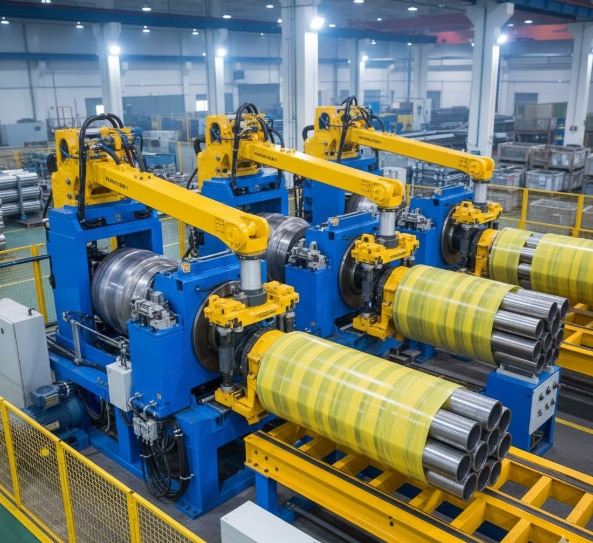 | Tube Bundling Machine The Tube Bundling Machine from Gallium Equipment Pvt. Ltd. is designed to automate the bundling and packaging of steel tubes with precision and... View product → |
Frequently asked questions
What determines the real throughput of a tube bundling system?
Real throughput depends on accumulation capacity, tube counting, alignment, transfer, weighing and strapping—not the strap head alone.
How do you choose a tube bundle configuration?
Compare bundle geometry with tube dimensions, wall condition, surface finish, handling equipment and the required securing material.
Which hazards require control during tube bundling?
Control pinch points, unexpected tube movement, strap recoil, stored energy, access to moving equipment and unstable bundles with guarding and procedures.
How should you validate a bundling system before purchase?
Specify tube ranges, bundle sizes, cycle targets, defect checks and acceptance tests, then validate them with representative production material.