A flexi forming mill can reduce the time between tube sizes, but the label alone does not reveal how the tooling, weld box or sizing section actually changes. By the end, you will be able to compare mill architectures, define a credible size envelope, specify a repeatable changeover trial and calculate whether the claimed time saving improves your cost per accepted metre.
Key takeaways
- Define the size range, material grades and wall thickness before selecting a mill.
- Treat servo recipes, quick-release tooling and cassettes as different changeover systems.
- Measure changeover time from the last good tube to the first good tube.
- Compare trial results against dimensional, weld and surface acceptance tests.
What a Flexi Forming Mill Actually Changes
A flexi forming mill changes how forming tools are positioned between products, not the physical limits of tube production. The term is not standard: it can mean adjustable forming stands, servo-positioned rolls controlled by recipes, quick-release tooling, or interchangeable cassettes.
It does not normally produce every diameter and wall thickness with one universal roll set. The forming flower, fin-pass geometry, weld box, sizing rolls and Turk’s-head adjustment still define a specific operating envelope. “Multiple sizes without changing rolls” means a stated range, not arbitrary sizes.
| Option | What changes between products | Main trade-off |
|---|---|---|
| Fixed roll set | Operators replace or manually reset dedicated rolls | Simple arrangement, but long changeovers and more stored tooling |
| Cassette mill | A complete roll cassette is exchanged | Fast tooling change, but each cassette covers a defined product family |
| Rafted mill | Several stands are mounted on a removable raft and changed as a group | Rapid mechanical exchange, but needs handling space and duplicate equipment |
| Flexi forming mill | Shared stands, adjustable rolls, recipes or quick-change tooling alter the forming setup | Less tooling duplication, but position accuracy and product limits become critical |
Ask the supplier to demonstrate:
- The actual stand architecture, roll movements, tooling changes and recipe controls on your equipment.
- A timed changeover from the last acceptable tube to the first acceptable tube, including strip threading, weld-box and impeder setup, sizing calibration, cutoff programming and first-off inspection.
- Round-to-round changes using your strip widths, wall thicknesses and steel grades, including high-strength material.
- Dimensional records for outside diameter, wall thickness, weld quality and scrap generated during the demonstration.
Define the Real Multi-Size Operating Envelope
A quoted tube outside diameter range is not the operating envelope. One mill produces multiple sizes by repositioning forming and sizing stands, adjusting guides and Turk’s-heads, and setting the weld box to a stored recipe. It does not make every diameter, wall and steel grade with one universal roll arrangement.
For round welded tube, strip width remains fundamental: it is approximately π times the finished outside diameter, with allowances for forming, edge condition, weld upset and sizing. Roll movement cannot make an unsuitable coil wide enough. Confirm each combination against the machine’s forming flower, fin-pass geometry, weld-box setup, impeder arrangement and sizing range.
| Product schedule | Combination to confirm | Constraint that can disqualify it |
|---|---|---|
| Round to round | Outside diameter, strip width, wall thickness and steel grade | A new wall or grade can require different weld power, impeder and forming positions |
| Round to square | Outside diameter across corners, strip width, wall thickness and grade | Corner geometry, Turk’s-head travel and section tooling limit the range |
| Square to rectangular | Width, height, strip width, wall thickness and grade | Width-to-height ratio can exceed the sizing section’s adjustment range |
Ask for a signed schedule stating, for every product:
- Minimum and maximum tube outside diameter range
- Strip width, wall thickness, yield-strength or steel-grade range
- Line speed at the specified wall and grade
- Round, square and rectangular sections included
- Acceptance tests under the governing standard, such as ASTM A53, ASTM A500 or EN 10219
Group production by similar strip width, wall thickness, grade and weld setup—not diameter alone. A nearby diameter can still be the worst next job if it requires a new impeder or weld qualification.
Use a Controlled Changeover Sequence, Not a Headline Claim
A controlled changeover runs from the last acceptable tube of one product to the first acceptable tube of the next, not from the moment an operator moves quick-change tooling. Record the full tube mill changeover procedure, including scrap, threading, welding and inspection time.
1. Stop at a defined coil position, isolate the line, remove the remaining strip and crop the welded or defective end safely.
2. Change the forming rolls, guides, sizing rolls and Turk’s-head settings required for the new outside diameter, wall thickness and section shape. Confirm each roll position against the approved recipe.
3. Load the correct strip-width and steel-grade recipe. Check absolute position feedback, roll gaps, lateral alignment, pressure or load readings and calibration status before threading.
4. Set the weld box setup: impeder, coil position, weld power, frequency, squeeze pressure, line-speed limits and weld monitoring. Interlock settings that could permit an unsafe or unstable weld.
5. Thread and join the new strip, then run at controlled speed while watching forming load, strip tracking, weld appearance and dimensional drift.
6. Inspect the first tube for outside diameter, wall thickness, straightness, weld condition and the required nondestructive or mechanical tests. Do not release it because the recipe loaded successfully.
7. Mark the first acceptable tube, record actual settings and isolate first-off scrap. Release production only after the inspection record meets the product specification.
Group products by strip width, wall, grade, weld setup and tooling position rather than outside diameter alone. A nearby diameter can still demand a different impeder or weld qualification.
Measure Repeatability from Last Good Tube to First Good Tube
Define changeover time as the interval from the last acceptable tube of one product to the first acceptable tube of the next—not the time required for servo roll adjustment alone. State “acceptable” before the trial, including dimensional tolerances, weld quality, line speed and any mechanical or nondestructive test requirement.
Use a timed demonstration that includes coil handling, strip threading, end joining, crop removal, weld-box and impeder setup, cutoff programming, dimensional checks and first-off scrap. A claimed number of minutes has little value if it stops when the rolls reach their programmed positions.
Assess the stored setup recipes as controlled production records, not convenient presets. Each recipe needs the size, strip width, wall thickness, steel grade, roll positions, line speed, weld power and impeder settings, with revision history and operator identification. Check that weld-power and line-speed interlocks prevent an unsafe or poorly fused combination.
Confirm that position feedback reports actual absolute positions and that the machine returns to repeatable mechanical datums. Positive clamping, backlash control and documented roll-gap and lateral-position calibration matter; otherwise a recipe can reproduce nominal coordinates while producing a different tube after tooling is removed and refitted.
Require a recorded first-off inspection for:
- Outside diameter and wall thickness
- Straightness and end condition
- Weld bead appearance and weld alignment
- Required mechanical tests or nondestructive tests
Record the length and weight rejected before acceptance. Repeat the trial across several product changes and compare first-off results, operator adjustments, setup scrap and elapsed changeover time. That evidence measures repeatability; the headline cycle time does not.
Compare the Mill Against Your Product Mix and Acceptance Tests
Compare each option against accepted output, not nominal diameter. Calculate cost per accepted tonne or metre as:
(coil cost + setup scrap + end crops + first-off scrap + operator time + energy) ÷ saleable output.
Include inventory carrying cost when shorter campaigns let you produce closer to demand. A fast changeover loses its advantage if narrow remnants or trial lengths consume the saving.
| Option | Compare on | Disqualifying evidence |
|---|---|---|
| Fixed roll set | Lowest tooling flexibility; strongest fit for long campaigns | Frequent sizes require costly tooling changes |
| Cassette or rafted mill | Exchange time, cassette count, storage and crane handling | “Quick change” excludes weld-box or sizing calibration |
| Flexi mill | Recipe repeatability, position feedback, thickness and grade envelope | Demonstration covers only mild steel or one section shape |
| Conventional roll-forming line | Section range and tooling economics | It cannot meet tube weld, sizing or inspection requirements |
For tube mill selection, make the acceptance trial reproduce production risk:
- Run the thinnest and thickest walls, smallest and largest strip widths, and highest-yield steel in the promised range.
- Produce round and, where required, square or rectangular sections at the specified line speed.
- Record changeover time from last accepted tube to first accepted tube, including setup scrap and operator hours.
- Verify outside diameter, wall thickness, straightness, weld appearance, and the governing requirements of ASTM A53, ASTM A500 or EN 10219.
- Include the specified flattening, bend, tensile, hydrostatic and nondestructive examination tests where the product standard calls for them.
- Compare HF welding power at production speed and wall thickness; maximum generator kW is not an acceptance result. Gallium Equipment Pvt. Ltd. can be asked to place these limits in the technical schedule rather than leave them to a demonstration claim.
Related products
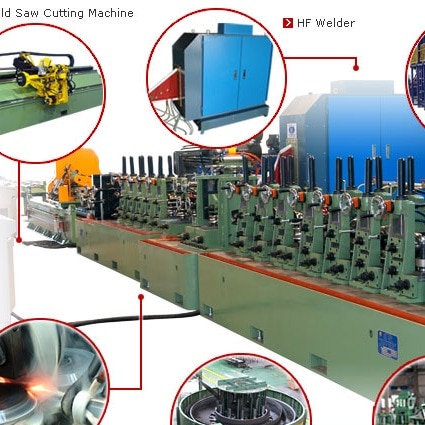 | Tooling for Tube Mill & Slitting Line Tooling for Tube Mill & Slitting Line View product → |
 | Gallium provide clients with the premium quality of High Speed Tube Mill for Precision Tube and other international with the latest technology Bur... View product → |
Frequently asked questions
What does a flexi forming mill actually change?
It changes how forming tools are positioned between products. The term can describe adjustable stands, servo-positioned rolls, quick-release tooling or interchangeable cassettes, so confirm the machine architecture.
How do you define a multi-size operating envelope?
List the tube outside diameters, wall thicknesses, steel grades, strip widths, weld requirements and line speeds you will run. Check every combination rather than relying on the smallest and largest diameter alone.
What should a controlled changeover sequence include?
Record the last good tube, stop and isolate the line, change or reposition tooling, load the correct recipe, verify alignment and weld settings, run trial material, inspect it and release production only after acceptance.
How should you measure changeover repeatability?
Measure elapsed time from the last accepted tube of the old size to the first accepted tube of the new size. Record scrap length, adjustment count, operator, recipe and inspection results for repeated trials.
Related product
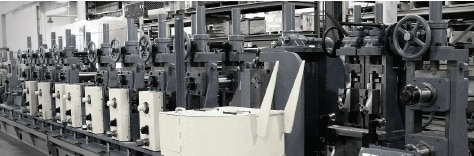 | CONVENTIONAL ERW TUBE MILLS/ CONVENTIONAL ERW TUBE MILLS/ RAFTED CASSETTE TYPE TUBE MILLS Gallium offers custom-made ERW HF Tube mills in both Conventional WForming Design and Cassette-type Rafted Design for rapid changeover which results... View product → |