A cleaner steel surface is not automatically the result of using less acid. You need to identify the actual EPS chemistry, follow the strip through every treatment stage, and compare water, emissions, waste, energy, metal loss and downstream performance before accepting a sustainability claim.
Key takeaways
- Treat EPS as a controlled process, not a single acid formula.
- Match dosing, temperature and residence time to grade and scale condition.
- Compare acid pickling with mechanical and abrasive cleaning by output and waste.
- Verify acid use, steel loss, rinse water and regeneration data before purchase.
What Eco Pickled Surface technology actually does
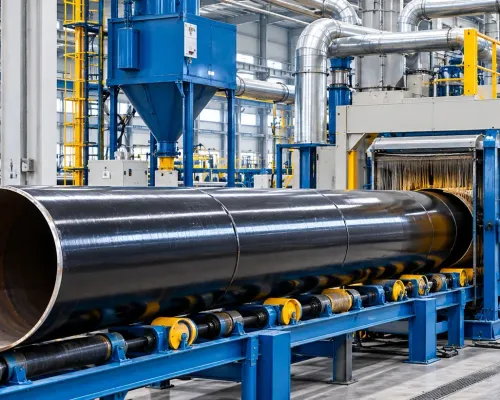
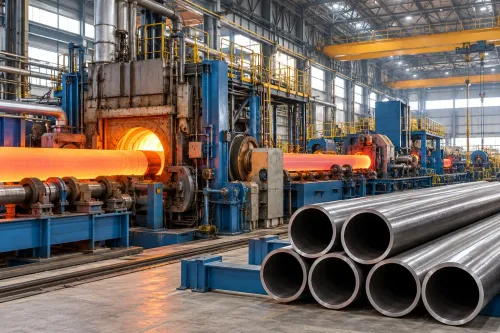
Eco Pickled Surface technology is an integrated, controlled acid-pickling process that removes mill scale while limiting acid use, steel loss, rinse water and waste. EPS is not a single acid formulation: carbon-steel lines commonly use hydrochloric acid pickling, with dosing, temperature, residence time, rinsing and regeneration controlled as one system.
The EPS process sequence normally follows this route:
- Uncoil incoming hot-rolled strip and weld or stitch the tail of one coil to the next, creating continuous operation.
- Level or tension the strip, then remove oil and loose contamination in a degreasing stage.
- Pass the strip through heated hydrochloric-acid tanks, where the acid dissolves iron oxides; control iron concentration and exposure time to prevent over-pickling the steel.
- Rinse through cascading water sections, then squeeze and dry the strip.
- Inspect surface cleanliness, residual scale, roughness and edge condition before recoiling or sending the strip directly to forming, welding, galvanizing, painting or drawing.
Line specifications determine whether this sequence works: state the steel grades, coil weights, strip width and thickness, line speed, scale condition and required scale-removal acceptance. Specify acid make-up per tonne, rinse water per tonne, fume capture and wastewater load as well.
Sulphuric acid pickling alternatives use different temperature and concentration controls. Shot blasting, abrasive descaling and alkaline cleaning remove different contaminants; they do not automatically replace chemical removal of tightly adherent scale. Stainless steel requires separate assessment because nitric-hydrofluoric chemistry targets chromium-rich oxides and creates fluoride-bearing wastewater.
How the line handles steel grades, scale and changing coil conditions
EPS removes scale cleanly only when acid exposure matches the oxide burden and the steel substrate. Steel grades affect oxide chemistry, but rolling and cooling history also determine whether the scale contains tightly bonded wüstite beside the steel, with magnetite and hematite above it.
| Variable | What it changes | Control response |
|---|---|---|
| Steel grade and scale condition | Oxide thickness, adhesion and dissolution rate | Set the acid window from trial results, not grade alone |
| Strip width and strip thickness | Exposed area, heat transfer and acid demand | Recalculate flow, temperature and residence time at each size |
| Coil weight | Coil length and time at operating conditions | Confirm threading, accumulator and bath-capacity limits |
| Line speed parameters | Available reaction time | Reduce speed when iron loading or heavy scale leaves residual oxide |
| Free acid, dissolved iron and temperature | Pickling rate and risk of substrate attack | Control all three together; acid concentration alone is insufficient |
A bath with acceptable free-acid concentration can still pickle poorly if dissolved iron has accumulated, the scale is unusually heavy or line speed is too high. Once the oxide is gone, continued exposure attacks the steel, increases metal loss and can roughen the surface; elapsed-time control cannot follow scale changes along a coil.
Specify a visible scale-removal acceptance limit, substrate metal-loss limit and downstream welding, forming or coating requirement. Verify each across the approved steel grades, strip width, strip thickness, coil weight and line speed parameters, then record acid make-up and rinse water per tonne.
That evidence distinguishes a controlled operating window from an eco claim based only on a favourable production mix.
How EPS compares with other surface-cleaning routes
Choose EPS when you need a continuous, controlled surface-cleaning route for carbon-steel strip and a consistent surface for forming, welding, galvanizing or coating. It is less suitable than a specialist process when the product, scale or contamination demands a different mechanism.
| Option | What it means | When it applies |
|---|---|---|
| EPS | Integrated cleaning and pickling with controlled rinsing and surface handling | Continuous strip with variable scale, tight surface targets and a need to limit acid, water and waste |
| Conventional hydrochloric-acid pickling | Rapid oxide dissolution with relatively little insoluble sludge | High-throughput carbon-steel strip; control fumes, iron-chloride loading, evaporation and hydrogen exposure |
| Sulphuric-acid pickling | Hotter acid treatment with different reaction and heat requirements | Heavy scale or plants already designed for sulphuric acid; a sulphuric-acid pickling comparison must include energy, sludge and rinse-treatment costs |
| Shot blasting, abrasive descaling and brushing | Mechanical removal using media, grit or contact tools | Thick plate, weld scale, local defects or products that cannot enter an acid bath; avoid it for narrow gaps and small tube interiors because of dust, noise, wear and media disposal |
| Alkaline cleaning | Removal of oil and grease rather than iron oxide scale | Oily cold-rolled strip before pickling; it cannot replace descaling |
| Electrolytic treatment | Oxide removal assisted by electric current and an electrolyte | Thin strip or tightly controlled high-speed lines where electrical control justifies added complexity |
Stainless steel needs a separate decision: nitric-hydrofluoric pickling removes chromium-rich oxide and heat tint, while carbon-steel EPS chemistry does not. Alkaline, mechanical or electrolytic routes also require product-specific trials.
What makes a pickling line genuinely more sustainable
A genuinely sustainable pickling line controls total environmental load per tonne, not just fresh-acid make-up. Specify free-acid concentration with dissolved iron, temperature, residence time and strip speed; a bath can contain enough acid yet pickle poorly when iron has accumulated or heavy scale meets excessive line speed.
Water control starts with closed-loop counter-current rinsing. Feed fresh water at the cleanest stage and move it toward dirtier stages to reduce rinse demand, drag-out and contaminated wastewater. Recover drag-out before rinsing.
Acid-fume extraction with scrubbers protects workplace air and prevents captured vapour becoming an uncontrolled emission. Measure electricity or fuel for bath heating and regeneration. Spray-roasting or fluidized-bed regeneration can recover hydrochloric acid and iron oxide from iron-chloride liquor, but it still consumes energy and produces purge streams and treated off-gas.
| Area | Evidence to request | Misleading shortcut |
|---|---|---|
| Acid | Make-up per tonne, free acid, dissolved iron and substrate metal loss | Comparing only litres of fresh acid |
| Water | Rinse water per tonne and wastewater volume | Claiming savings without measuring drag-out |
| Air | Capture performance, scrubber outlet data and maintenance records | Calling extraction alone emission control |
| Waste | Neutralisation and filtration data, iron load, sludge mass and disposal route | Describing regeneration as zero waste |
| Steel risk | Hydrogen-embrittlement assessment for high-strength or cold-worked grades | Treating every cleaner surface as equally safe |
Tie the environmental claim to scale-removal acceptance and downstream coating performance. Otherwise, reduced consumption may reflect slower production, lighter scale or an operating window that shifts waste elsewhere.
How to specify and verify an EPS line before purchase
Do not award an EPS line on acid consumption alone: require a witnessed trial using your own worst-case coil, then test the treated strip through each intended operation. Record surface cleanliness, substrate metal loss, residual scale and flash rust after storage, not merely whether the strip looks bright.
Specify acceptance tests for:
- Forming and drawing: measure cracks, galling, dimensional change and drawing-force stability.
- Galvanizing: record zinc wetting, coating mass and bare spots after the agreed pretreatment.
- Painting or coating: measure roughness, surface profile and coating adhesion after curing.
- ERW: weld tensile or flattening results, weld-zone defects and inspection lighting conditions; define the light level, viewing angle and inspection method before the trial.
Compare proposals against identical boundary conditions:
| Evidence | Proposal A | Proposal B |
|---|---|---|
| Throughput | Tonnes/hour at your width, thickness and coil range | Tonnes/hour at the same range |
| Chemistry | Free acid, dissolved iron, temperature and residence-time limits | Same values, with alarms and automatic correction |
| Surface result | Scale-removal limit, roughness range and metal loss | Same acceptance limits, independently measured |
| Resources | Acid make-up, rinse water, energy and wastewater load per tonne | Same units and production basis |
| Downstream proof | Forming, welding, galvanizing, painting or drawing trial data | Named test method and retained samples |
Ask for control-loop response when scale thickness changes; elapsed-time control alone can over-pickle bare steel. If the line feeds an ERW mill, include coil-joining transitions in the trial; Gallium Equipment Pvt. Ltd. can help examine whether those transitions disturb strip tracking or weld quality.
Frequently asked questions
What does Eco Pickled Surface technology do?
It removes mill scale from steel through controlled acid pickling while managing acid use, steel loss, rinse water and waste.
How does an EPS line handle changing coil conditions?
The line adjusts process controls such as acid dosing, temperature, residence time and rinsing for different steel grades, scale loads and coil conditions.
How does EPS compare with other surface-cleaning routes?
EPS uses integrated acid-pickling control; compare it with mechanical or abrasive cleaning by surface result, throughput, consumables, steel loss, water use and waste.
What should you verify before purchasing an EPS line?
Request performance data for acid consumption, steel loss, rinse-water use, waste generation, grade range, line speed, scale condition and acid regeneration.